

Workshops
Political education designed for every stage of learning.
Political education designed for every stage of learning.
Amicus Youth offers nonpartisan civic and political literacy workshops for schools, classrooms, libraries, youth programs, nonprofits, and community organizations.
Our free workshops make complicated topics clear and age-appropriate without telling students what to believe. Students learn accurate definitions, examine how institutions work, evaluate information, and develop the knowledge needed to form their own informed opinions.


Elementary School Workshops
Our upper-elementary workshops are designed primarily for students in grades 5–6. Each workshop lasts approximately 30 minutes and introduces one major civic-literacy topic through clear explanations, relatable examples, guided questions, and an age-appropriate activity.


How Governments Actually Work
This workshop teaches students the government basics, ranging from rules, level of government, and how problems become policies
Students use short scenarios to identify which part of government would be responsible for different decisions.
Best for: Government units, U.S. history, Constitution lessons, and civic-learning programs


Beyond Left vs Right
The workshop introduces the difference between an ideology, a political system, and a government policy.
The goal is not for students to choose a political position. It is for them to understand that political labels require clear definitions and context.
Best for: Social studies, civics, history, advisory periods, and youth programs


Facts, Opinions, and Missing Context
Students learn how political information reaches them through news, videos, social media, search results, and recommendation algorithms.
Students practice examining one guided example using basic source-verification questions.
Best for: Media literacy, digital citizenship, English, advisory periods, and technology programs

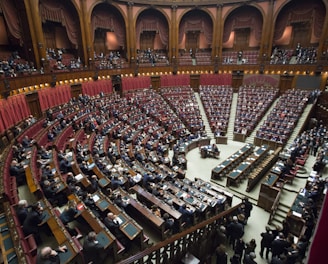
Mini Mock Government
Students learn about the various roles in the government and simulate a mock-congress. Students will debate, amend, vote, and reflect on a school-related bill
Best for: Social studies, civics, history, advisory periods, and youth programs
Middle School Workshop
Beyond Left vs. Right: Political Ideologies & Systems


Students learn the difference between:
An ideology: beliefs about how society and government should work
A political system: the institutions and rules through which power is organized
A policy: a specific action taken by a government
Grades 7–8 | 30 minutes | Nonpartisan
Political language is often presented as a simple competition between “left” and “right.” This workshop shows students why that model is useful—but incomplete.
Students also examine how political systems can be described through separate dimensions, including:
The workshop introduces major political and economic ideas, including liberalism, conservatism, libertarianism, capitalism, socialism, social democracy, democratic socialism, communism, nationalism, fascism, democracy, and authoritarianism.
Presidential and parliamentary systems
Federal and unitary systems
Republics and monarchies
Democracies and authoritarian systems
Multiparty, two-party, dominant-party, and one-party structures
Using examples from the United States, United Kingdom, Sweden, and China, students learn that countries are combinations of institutions, economic policies, and political traditions, not single ideological labels.
Partnerships for Nonprofits and Organizations
Create a political-literacy program for your community.
Amicus Youth also partners with nonprofits, youth organizations, libraries, community groups, educational programs, and civic institutions. Organizations may request an existing Amicus Youth workshop or propose a customized partnership based on the needs of their audience. Partnership opportunities may include:
Educational Workshops
Bring an existing elementary or middle school workshop to your students, members, volunteers, or program participants.
Customized Programming
Work with Amicus Youth to adapt a workshop for a particular age group, event theme, community, or educational objective.
Every partnership must remain consistent with Amicus Youth’s nonpartisan educational mission.
Long-Term Partnerships
Organizations interested in ongoing collaboration may work with Amicus Youth on a workshop series, recurring youth program, school outreach initiative, research project, or educational campaign
Youth Engagement
Create opportunities for young people to learn about government, public service, political institutions, law, media, and responsible civic participation
Location
Virginia/DC Area
Contacts
The.Amicus.Youth@gmail.com